Choosing oil spill absorbent materials for industrial use requires more than comparing advertised capacity. You need to match the absorbent to the liquid, spill pattern, work environment, response procedure, storage plan, and disposal requirements.
This guide helps you compare oil-only pads, absorbent mats, socks, pillows, booms, and spill kits for factories, fleets, gas stations, repair shops, marine operations, ports, and other industrial settings.

The wrong absorbent may slow your response, increase cleanup work, or fail to control oil moving across floors, equipment, loading areas, drains, or water.
A general-purpose absorbent may be appropriate for mixed, non-aggressive liquids. However, it may not be the right choice when you need to limit water uptake during an oil spill on water. Similarly, a thin pad may work for a localized machinery leak but provide insufficient coverage for repeated releases near a drain or loading area.
Your purchasing decision should consider the complete response process:
The best oil absorbent for factories is rarely one product format. Your facility may need a combination of pads, mats, socks, pillows, booms, and spill kits.
Before comparing product formats, identify the liquid you need to absorb. Color and shape are not enough. You need to determine whether the release is primarily petroleum-based, water-based, mixed, corrosive, reactive, or otherwise hazardous.
Oil-only absorbents are commonly selected for petroleum-based oils, fuels, lubricants, hydraulic fluids, and similar non-water-based liquids. Where the product is specifically designed for selective oil uptake, it may be considered for applications in which limiting surrounding water uptake is important.
Typical industrial applications include:
Oil-only materials may be a suitable starting point for facilities with predictable petroleum-based spill risks. You should still review the product specification and test it against the liquid and surface conditions at your facility.
Universal absorbents are intended for a broader range of non-aggressive liquids. Depending on the product construction and compatibility information, they may be used for some water-based fluids, coolants, oils, or maintenance liquids.
However, “universal” does not mean compatible with every chemical. You should review the manufacturer’s compatibility information before using a universal absorbent with solvents, concentrated chemicals, oxidizers, acids, bases, or unknown liquids.
Universal products may simplify inventory where fluid types vary. They should not replace a chemical-specific response product when the substance presents a known chemical hazard.
Chemical absorbents are selected for specific hazardous or aggressive liquids. Their compatibility, construction, labeling, and handling requirements must be reviewed against the substances used at your facility.
Do not assume that an oil-only or universal absorbent is appropriate for an unidentified chemical release. If the substance is unknown, follow your emergency response procedure for isolation, identification, personal protective equipment, training, escalation, and specialist support.
Use the following table as a purchasing aid, not as a substitute for a compatibility review.
| Decision factor | Oil-only absorbent | Universal absorbent |
|---|---|---|
| Primary application | Petroleum-based oil, fuel, lubricant, or hydraulic fluid | A range of non-aggressive liquids, potentially including oil and some water-based fluids |
| Oil on water | May be preferred when selective oil uptake and floating performance are confirmed | May absorb surrounding water as well as oil |
| Machinery leaks | Suitable when the leaking fluid is known to be oil-based | May be suitable where maintenance fluids vary |
| Inventory logic | Supports a dedicated oil-response station | May simplify general-purpose maintenance inventory |
| Chemical uncertainty | Not a substitute for chemical absorbents | Not automatically compatible with hazardous chemicals |
| Key verification point | Confirm oil selectivity, surface use, and handling performance | Confirm compatibility with each liquid used in the work area |
If your facility uses both oils and water-based maintenance fluids, separate oil-only and universal stations may be more practical than one product for every location.
The format determines how quickly you can deploy the absorbent and how well it matches the spill pattern.
Industrial oil absorbent pads are useful for wiping, spot absorption, equipment leaks, and placement beneath valves, fittings, pumps, and vehicles.
Choose pads when you need:
Pads are not normally the best choice for long-perimeter control. If oil is moving across a floor, you may need socks or mats first, followed by pads for localized cleanup.
Absorbent mats and rolls provide broader surface coverage than individual pads. They may be useful beneath vehicles, around maintenance platforms, on production floors, or in areas exposed to repeated drips.
Consider mats for:
When evaluating mats, consider surface durability, tear resistance, lint or residue, wet handling, storage density, and whether workers can position or cut the material efficiently.
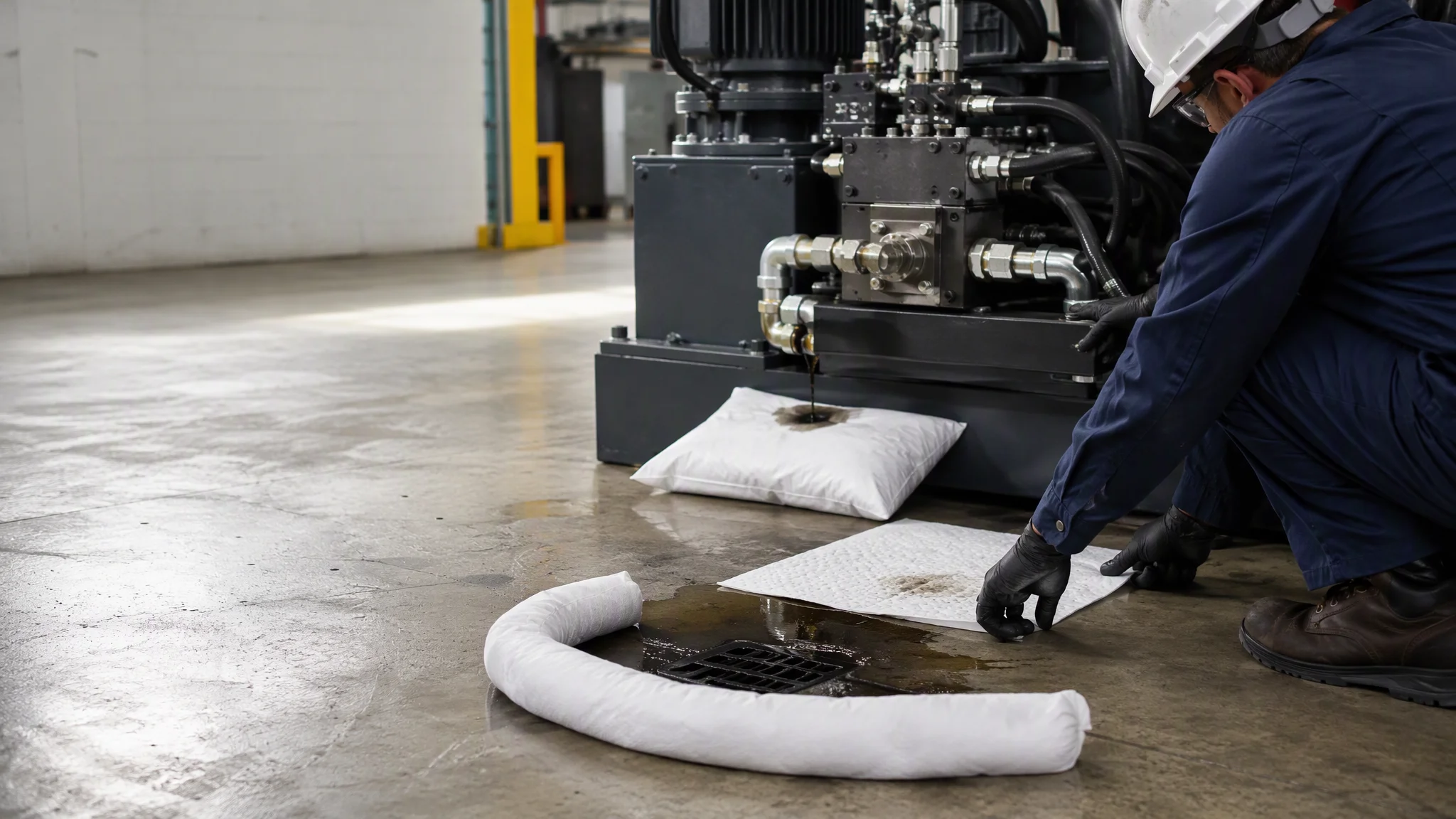
Oil absorbent socks are containment tools designed to create a boundary around a spill. They may also be positioned around machinery, beneath leaking connections, or along the edge of a work area.
Use socks when:
Socks should not be treated as a complete substitute for pads or mats. They help control movement; pads, mats, pillows, or other recovery materials may still be needed to remove the contained liquid.
Absorbent pillows provide a concentrated absorbent mass for pooling liquid and recurring leaks. They may be useful beneath equipment, inside drip trays, near tanks, or in locations where liquid collects in a confined area.
Pillows can be practical when the release is deeper or more concentrated than a flat pad can address. You still need to isolate the leak where safe and prevent workers from entering or walking through the contaminated area.
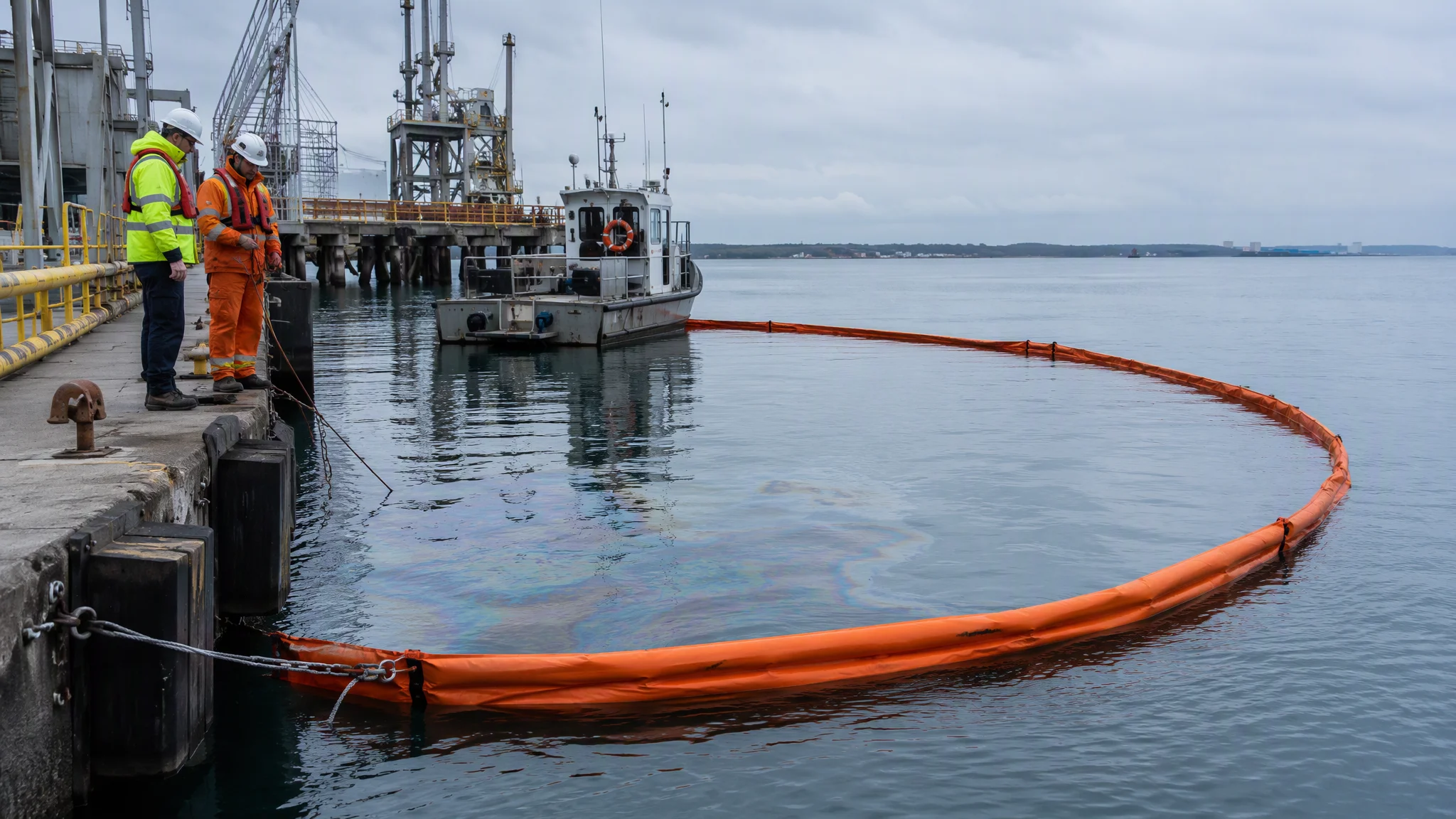
Oil spill absorbent booms are used for larger-scale perimeter control, particularly around water, shorelines, drainage channels, tanks, and transfer areas.
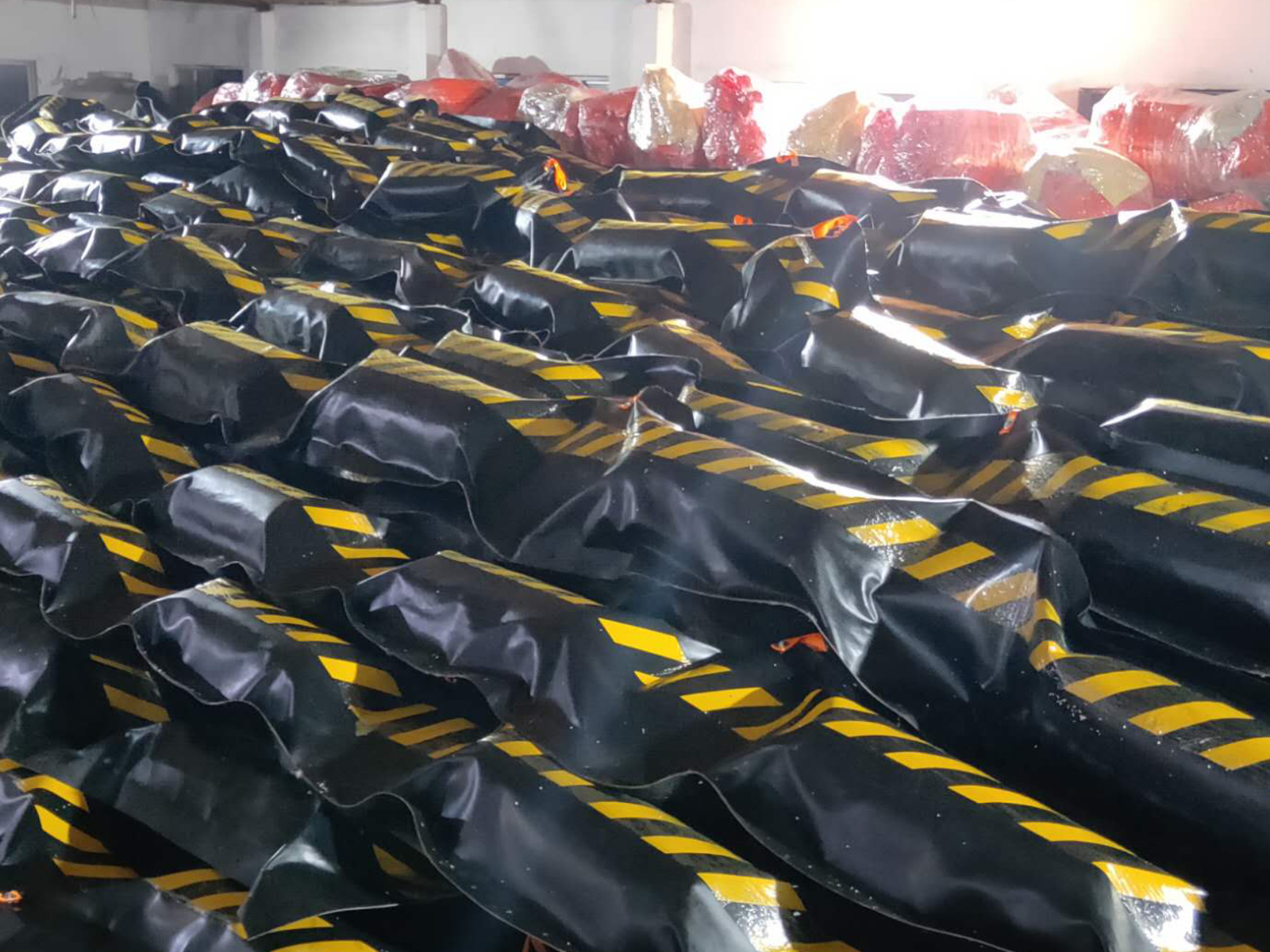
Select booms when your main concern is oil movement across a larger surface or movement caused by water flow, wind, or site drainage. Performance depends on deployment, anchoring, overlap, access, weather, and the characteristics of the oil.
For marine operators, port authorities, and facilities near waterways, booms should form part of a broader response plan. A boom does not eliminate the need for recovery, worker protection, source control, collection, or disposal procedures.
Spill kits combine multiple response components in a portable package. Depending on the kit type, contents may include pads, socks, pillows, bags, gloves, goggles, and other collection or disposal supplies.
A spill kit may be useful when you need:
When choosing an oil spill kit, start with credible spill scenarios rather than package size alone. A kit for a truck fleet may need different storage and mobility features from a kit positioned beside a fixed industrial tank.
| Spill condition or location | Recommended primary format | Possible supporting materials | Procurement consideration |
|---|---|---|---|
| Small drip from a pump or fitting | Pad | Pillow or collection bag | Keep within immediate reach of maintenance staff |
| Repeated leakage beneath machinery | Mat or pad | Pillow and disposal supplies | Consider traffic, surface durability, and replacement frequency |
| Oil moving toward a drain | Sock | Pads or mats | Place containment before beginning surface cleanup |
| Pooling liquid beneath equipment | Pillow | Pads and collection bags | Confirm positioning does not create a trip hazard |
| Oil on water or near a shoreline | Boom | Oil-only pads, socks, and recovery supplies | Plan anchoring, overlap, access, and collection |
| Mobile maintenance response | Spill kit | Additional pads and bags | Check vehicle storage, labeling, and replenishment |
| Large or uncertain release | Site-specific response system | Trained responders and escalation procedure | Do not rely on absorbents alone |
A product’s nominal absorption information does not show whether it will control your actual spill. You need to evaluate three separate factors: volume, location, and movement.
Estimate credible spill scenarios at each location:
Do not use one average scenario for every work area. A maintenance shop, warehouse, tank area, loading dock, and marine zone may each require a different response package.
The same liquid may require different products depending on where it is released.
A pad may be suitable on a clean maintenance bench. A sock may be more important near a floor drain. A mat may provide better protection beneath a vehicle. A boom may be necessary near a waterway or transfer point.
Map response materials to fixed risk points rather than storing every product in one central location.
Oil can spread through foot traffic, vehicle movement, floor slope, drainage, water flow, and wind. Your first action may need to be containment rather than absorption.
Use this sequence as a planning framework:
This sequence is especially important when you are selecting absorbent materials for machinery leaks. Placing pads beneath a leaking machine may not be sufficient if oil is also moving across the floor.
After confirming the liquid and product format, compare construction and handling characteristics.
Ask how performance was tested and which liquid was used. ASTM F726 is a recognized test method associated with sorbent performance evaluation. Test results should be interpreted carefully because actual performance may vary with viscosity, temperature, contact time, surface conditions, saturation, and handling.
Do not compare two products solely by one capacity number unless the test methods and conditions are reasonably comparable.
A lightweight material may be easier to carry and deploy for routine work. A heavier or thicker material may be preferred where you need greater durability or more robust handling.
Balance:
For equipment, production floors, and maintenance areas, residue or fiber release may create additional cleaning work or slip concerns. Ask whether the material is designed for clean oil pickup and whether it sheds fibers under your operating conditions.
Suzhou Jiahe’s provided product positioning includes fast absorption and no residue. Treat these as claims requiring application-specific verification, not as a guaranteed result for every liquid, surface, or use condition. Request samples and evaluate them before standardizing a material across multiple sites.
Durability matters when absorbents are exposed to:
A material that absorbs quickly but tears during recovery may increase labor and waste-handling difficulties.
Your site conditions can change the right product choice.
Indoor locations require attention to slip hazards, drains, pedestrian traffic, forklifts, and emergency access. Place response materials where workers can reach them without crossing the contaminated area.
Outdoor products may face rain, wind, uneven surfaces, and temperature variation. Store unused materials in a way that protects them from weather, contamination, and unauthorized access.
Marine operators and port authorities need to consider water movement, current, wind, tide, shoreline access, and recovery logistics. Booms may require anchoring and a deployment plan. Pads and socks can support localized recovery but may not control a moving release by themselves.
Truck fleets, gas stations, and auto repair shops often need mobile and visible response materials. A combination of oil-only pads, socks, pillows, and compact spill kits may support vehicle servicing and yard response. Your site procedure should determine the appropriate contents.
Absorbents do not replace personal protective equipment, hazard communication, ventilation, training, or emergency procedures. Your EHS or HSE team should define the precautions required for each liquid and location.
A spill response program can fail even when you purchase suitable materials. A common problem is that the right products are unavailable when workers need them.
Create an inventory plan based on:
Use clear labels so workers can distinguish oil-only, universal, and chemical response materials.
After every use, inspect the station and replace consumed items. Record partial use, not only complete kit depletion. If one facility repeatedly uses socks while another mainly uses pads, your stock mix should reflect actual consumption.
For distributors, standardize product descriptions, packaging information, and application guidance so customers can distinguish oil-only and universal products.
Your absorbent selection should support your existing environmental, safety, and emergency response procedures.
In the United States, EPA’s Spill Prevention, Control, and Countermeasure framework under 40 CFR Part 112 may apply to certain facilities depending on factors such as oil storage and operations. Your environmental professional should determine whether the rule applies and what your facility plan requires.
OSHA’s HAZWOPER standard, 29 CFR 1910.120, addresses hazardous waste operations and emergency response situations. It includes requirements related to training and response roles in applicable circumstances. Do not assign employees to response activities beyond their training and authorization.
ASTM F726 can help you understand how sorbent performance may be evaluated. It does not replace a site-specific selection review, compatibility assessment, or emergency response plan.
Disposal requirements vary according to:
Never assume that an oil-soaked absorbent can be disposed of as ordinary waste. Label, store, and transfer used materials according to your internal procedure and applicable law. If the liquid is unknown or potentially hazardous, escalate the decision to your EHS/HSE team or a qualified waste professional.
General information disclaimer: This article provides general procurement and planning information. It is not legal, environmental, or safety advice. You should review absorbent selection, emergency response plans, training requirements, and disposal procedures with qualified professionals familiar with your site and jurisdiction. Regulatory requirements may change, and publication should include a current legal and EHS review.
Use this checklist before approving an oil absorbent material or spill kit.
An OEM or ODM manufacturer may help you move beyond generic absorbent purchasing, especially when you manage multiple facilities, distribute industrial products, or need consistent branding.
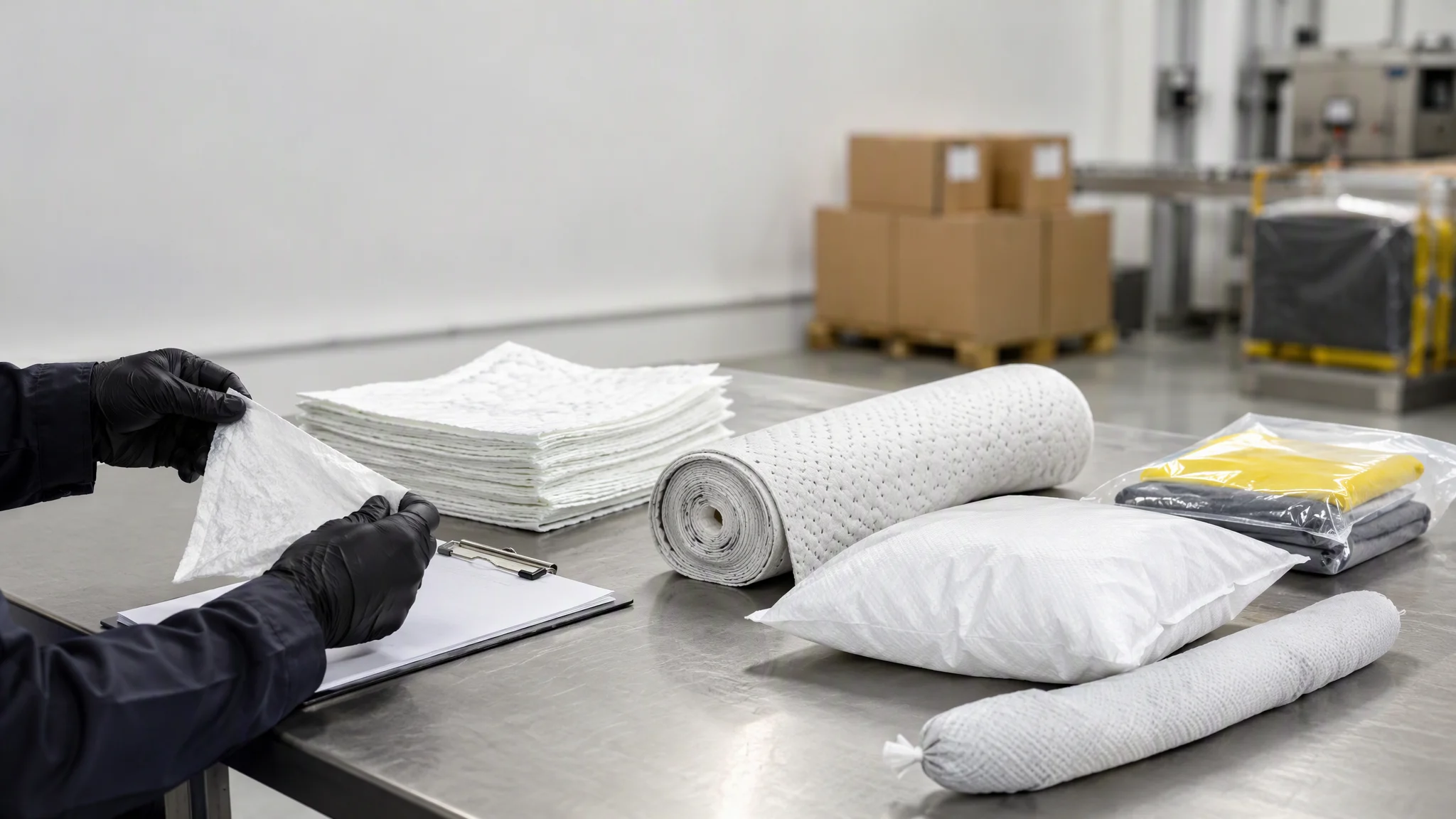
Request samples for the applications you care about. Test them against representative oils, surfaces, temperatures, handling methods, and containment layouts.
Evaluate:
Complete a written internal recommendation before a broad rollout.
Minimum order requirements may differ by product type, material, color, packaging method, and customization level. Ask the manufacturer to explain purchasing options for standard products, private-label products, and custom packaging.
Do not assume that one MOQ or one lead time applies to every product line. Confirm commercial terms for each SKU during quotation.
According to the provided company information, Suzhou Jiahe is an ODM and OEM manufacturer specializing in custom logo and packaging solutions for spill control products.
Customization may help you:
Your artwork review should include product names, application claims, handling instructions, disposal language, and regulatory statements. Any performance or compatibility claim should be supported by product-specific documentation.
Before approval, ask what technical documents are available for the exact products you are evaluating. Depending on your procurement process, you may need product specifications, test-method information, material details, packaging drawings, quality-control records, or inspection support.
Verify every document against the exact material, configuration, and supplier entity you plan to purchase. This article does not confirm any Jiahe ISO certificate, third-party report, customer count, inspection result, MOQ, capacity, or delivery time.
Your logistics choice affects inventory planning and landed cost.
Ask the manufacturer and logistics provider to state shipping terms clearly. Compare total landed cost rather than factory unit price alone.
For oil absorbent materials for industrial use, Suzhou Jiahe’s stated product range includes oil absorbent pads and rolls, absorbent pillows, absorbent socks, oil containment booms, and spill kits. For OEM, ODM, logo, and packaging discussions, contact Jiahe.
Start with the liquid type, then evaluate spill size, spread direction, location, surface conditions, handling, storage, and disposal. Many facilities need a combination of oil-only pads, mats, socks, pillows, booms, or spill kits rather than one format.
Oil-only absorbents are selected primarily for petroleum-based liquids and may be preferred when selective oil uptake is important. Universal absorbents are intended for a wider range of non-aggressive liquids. Neither type should be assumed compatible with every chemical.
The appropriate choice depends on your factory’s spill scenarios. Pads suit localized leaks, mats cover work areas, socks control spreading oil, pillows address pooling, and spill kits support portable response. A site-specific combination is usually more useful than one product type.
Use socks when oil is spreading across a floor or toward a drain, doorway, or sensitive area. Place the sock around or in front of the spill to create a boundary, then use pads, mats, or pillows to absorb the contained liquid.
Booms may be useful when oil can spread across water, shorelines, drainage channels, or larger transfer areas. Their effectiveness depends on deployment, anchoring, overlap, site conditions, and recovery planning.
They may be selected differently because machinery leaks are often recurring, localized, and exposed to equipment contact or traffic. Pads, mats, and pillows may be considered for these areas, while socks may be needed if oil can travel toward drains or walkways.
Check the test method, test liquid, viscosity, temperature, contact time, and calculation method. ASTM F726 may be relevant to sorbent performance evaluation. Compare results only when the test conditions are reasonably comparable to your application.
Identify the liquid, likely spill scenarios, response locations, worker roles, and containment steps. Confirm that the kit includes the correct absorbent type and appropriate supporting items for deployment, collection, labeling, and disposal under your procedure.
Choosing industrial spill response materials starts with the liquid and ends with the full response process. Match oil-only pads, mats, socks, pillows, booms, and spill kits to your actual risks, then validate the selection with samples and a site-specific review.
For OEM, ODM, logo, and packaging discussions, contact Jiahe Spill Control. You can also browse the oil and fuel spill absorbent range or industrial spill kits.
Image note: Figures 1–3 use Jiahe website assets. Figures 4–6 are AI-generated editorial illustrations created for explanatory use in this article; they are not product specification diagrams and should not be treated as evidence of exact product configuration.