Small leaks can become costly incidents when they reach a floor drain, storm grate, bare soil, or nearby waterway. Universal absorbent socks give your team a fast way to contain identified, common workplace liquids around equipment, storage areas, and access points.
This guide explains what universal absorbent socks can do, where they should not be used, and how to build them into a practical spill response plan.
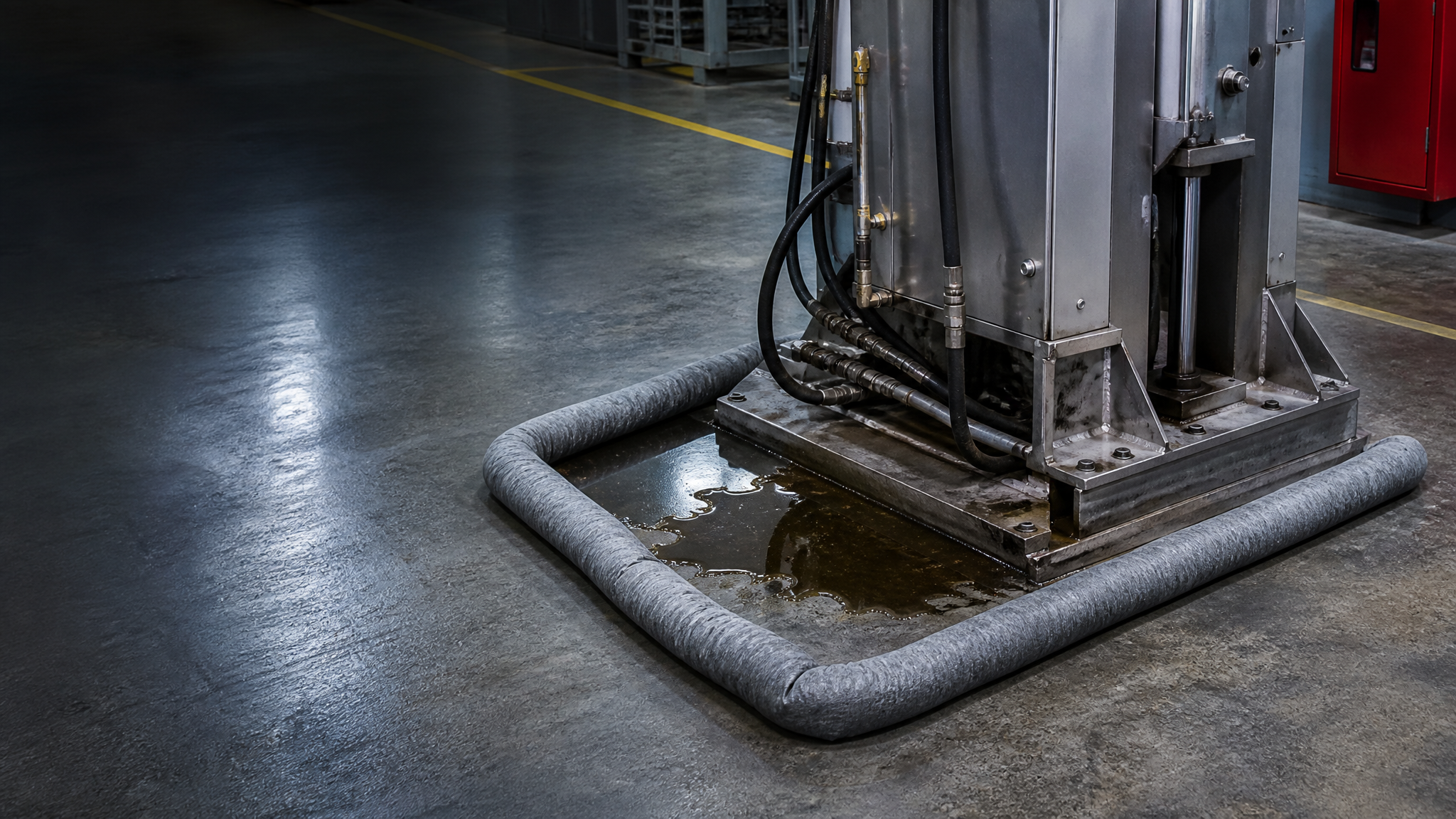
A universal absorbent sock is a flexible, fabric-wrapped tube filled with absorbent media. It is designed for common workplace liquids such as oils, coolants, and water-based fluids, subject to the product specification and liquid compatibility.
Unlike an absorbent pad, which mainly covers and absorbs a surface, a sock performs two jobs:
The cylindrical shape allows you to form a ring, U-shape, or straight dike around machinery, door thresholds, floor drains, drum storage, and other leak-prone locations.
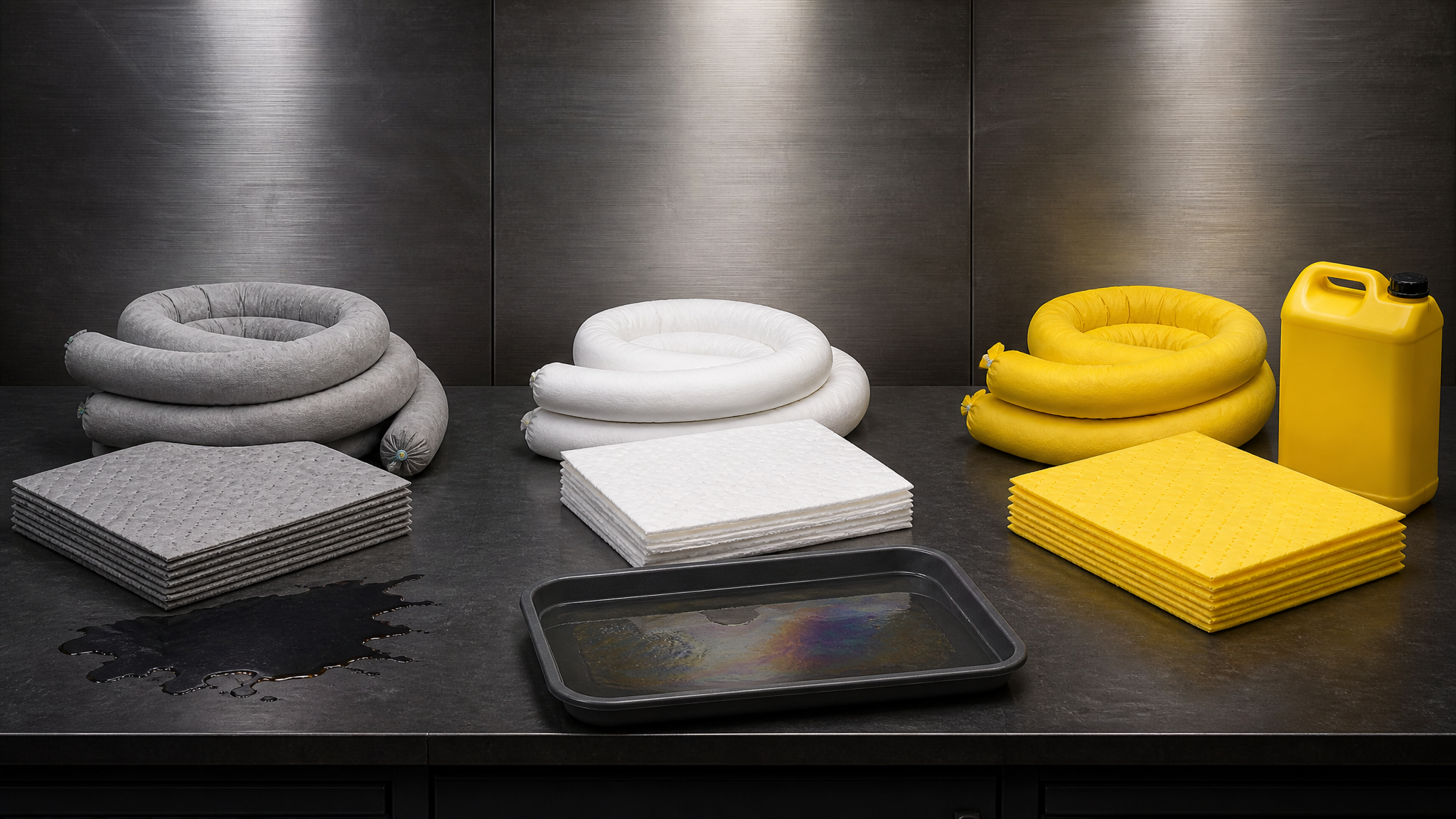
Jiahe’s universal-purpose spill absorbents include sock, pad, and roll formats for distributors and industrial facilities. Choose the format according to the liquid, expected volume, surface, and response procedure—not simply by color or product name.
When liquid reaches the outer sleeve, it moves into the absorbent fill and is retained inside the sock. The flexible sleeve conforms to many floor shapes and equipment bases, helping reduce the path available for a spill to travel.
A universal absorbent sock is not the correct choice for every spill. The liquid category should determine the absorbent grade.
| Selection factor | Universal absorbent | Oil-only absorbent | Chemical absorbent |
|---|---|---|---|
| Best starting point | Identified oils, coolants, and water-based liquids | Hydrocarbon spills on land or water | Corrosive, reactive, or hazardous chemicals |
| Water behavior | Absorbs water; will sink | Repels water; stays afloat | Varies; verify SDS |
| Typical locations | Workshops, floor drains | Marine decks, ports | Labs, chemical stores |
Do not treat “universal” as “safe for every chemical.” For an unlabeled, unknown, or highly reactive liquid, stop and follow your site emergency procedure. Review the Safety Data Sheet (SDS) and select a chemical-rated product with documented compatibility.
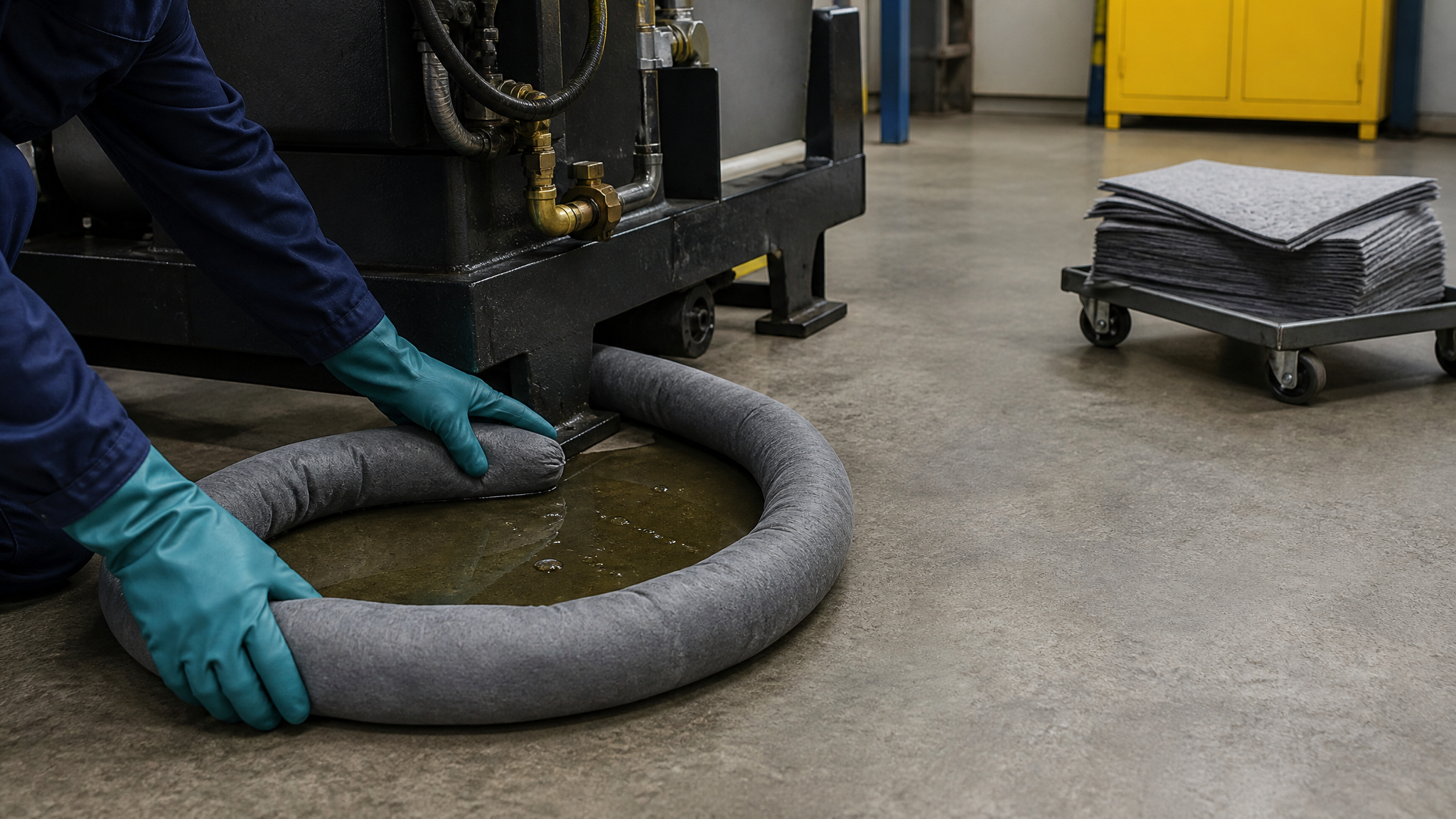
Hydraulic systems and pumps often develop slow leaks. Place socks around the equipment footprint to keep the liquid inside a defined area while maintenance personnel address the source.
A sock placed upstream of a floor drain can provide a rapid first line of defense. A staged spill kit can place socks, pads, and PPE in one accessible location.
Procurement Tip: Measure the perimeter of each high-risk area, then confirm the required sock length and backup stock with your supplier. Avoid purchasing by case count alone.
Suzhou Jiahe Non-woven Products Co., Ltd. is an OEM and ODM supplier. For private-label or distributor programs, we support:
No. They absorb water and will sink, losing their containment function. For oil on water, use oil-only absorbents or floating booms.
It depends on the absorbed liquid. The product alone does not determine classification. Ask your EHS team to assess the material before disposal.
Universal absorbent socks are a practical first barrier for identified workplace leaks. Review Jiahe’s universal-purpose absorbents or contact us for samples and supply support.